Concrete Repair & Protective Sealing in Hot Springs, AR
Specialized structural concrete repair, high-strength epoxy crack bonding, expansion joint caulking, spall patching, and deep penetrating sealing. (Please note: we specialize in structural slab repairs and do not provide decorative or cosmetic resurfacing overlays).
- Trade Experience: 27+ Years (Est. 1999)
- License Number: AR Lic #0300550824
- Repair Method: Structural Epoxy & Polyurethane
- Joint Sealing: MasterSeal NP1 Commercial Polyurethane
- Surface Sealant: Deep-Penetrating Silane / Siloxane
- Water Repellency: 100% Hydrophobic Barrier
Commercial-Grade Concrete Restoration Systems
Ignoring cracks allows Arkansas rainwater to infiltrate beneath the slab, eroding subgrade soil and creating freeze-thaw spalling. Our industrial repair systems bond fractured slabs back together and seal all entry points against water intrusion.
| Engineering Parameter | A & P Concrete Construction Standard |
|---|---|
| Structural Epoxy Crack Injection | High-modulus, two-component structural epoxy injected under pressure into cracks to chemically weld separated concrete sections back into a unified slab. |
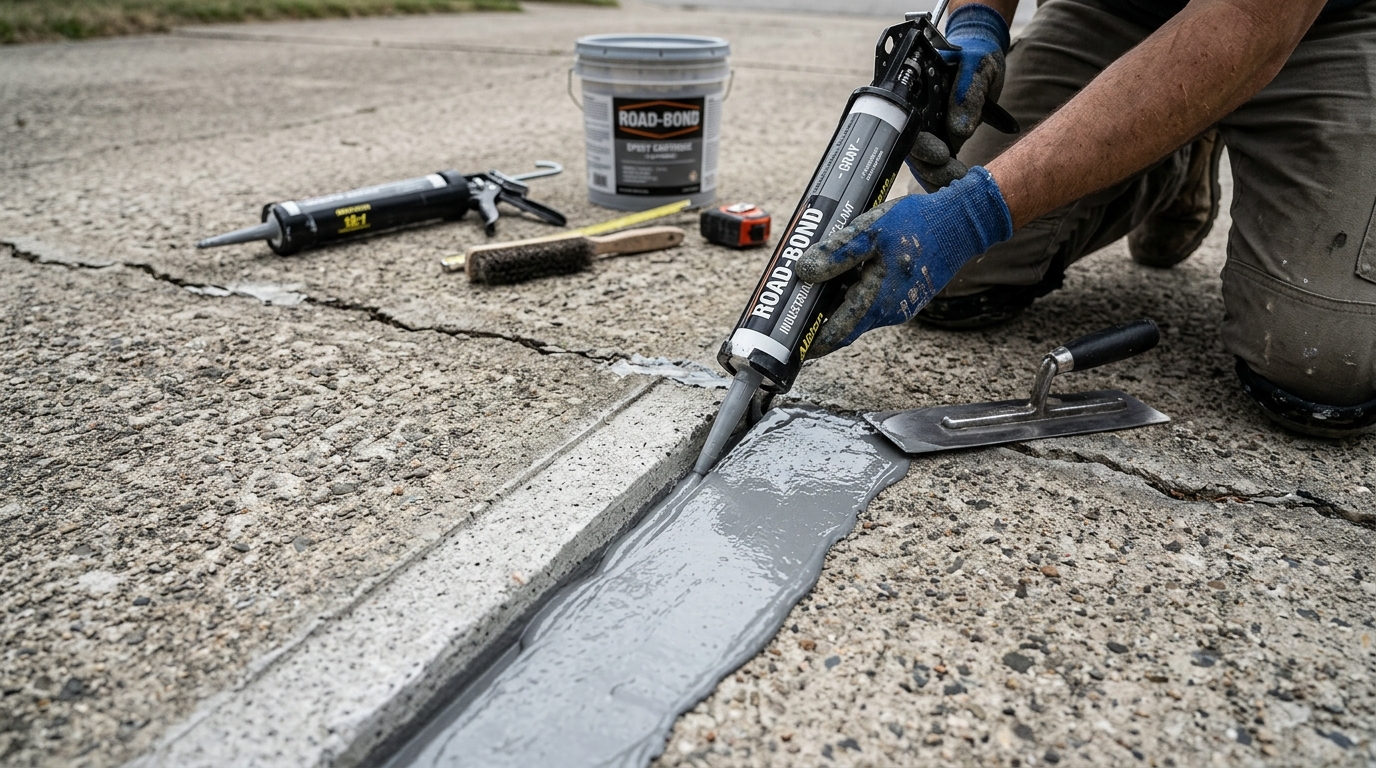
| Flexible Joint Caulking | Removal of rotted wood expansion strips, followed by closed-cell backer rods and commercial MasterSeal NP1 polyurethane sealant that flexes with seasonal temperature shifts. |
| Spall & Surface Patching | Chipping away delaminated concrete down to sound aggregate, priming with bonding agents, and applying high-early-strength structural repair mortars. |
| Industrial Rotary Pressure Cleaning | 4,000 PSI rotary surface cleaners remove deep oil stains, mildew, embedded red clay, and tire marks prior to sealant application. |
| Penetrating Silane/Siloxane Sealant | Deep-penetrating hydrophobic sealers that chemically react inside the concrete pores, repelling water, salt, and deicers without creating a slippery film. |
| Radon & Moisture Barrier | Sealing expansion joints and foundation perimeters blocks sub-slab moisture vapor and radon gas from entering basements and living quarters. |
Our 6-Step Installation Process
Every project follows our rigorous engineering workflow to ensure zero settlement, optimal curing, and lifelong durability.
We inspect cracks to determine whether they are minor shrinkage fractures or active structural settling that requires doweling or subgrade injection.
Cracks are diamond-blade routed to clean vertical edges, blown out with oil-free compressed air, and vacuumed to ensure 100% bonding adhesion.
Low-viscosity structural epoxy is injected into the routed crack, filling the void from the bottom up to restore compressive strength.
Old rotten fiberboard and dirt are removed from expansion joints. Closed-cell foam backer rods are inserted to control sealant depth.
Industrial UV-stable polyurethane joint sealant is gunned and tooled flush to create a watertight, flexible barrier that moves with the seasons.
The entire surface is pressure-washed with rotary cleaners and treated with deep-penetrating silane/siloxane sealer for 5+ years of water repellency.
Estimated Cost & Pricing Breakdown
Transparent pricing based on actual Hot Springs area project metrics. We provide 100% free on-site measurements and firm written quotes.
| Project Scope | Typical Price Range | Inclusions & Specifications |
|---|---|---|
| Structural Epoxy Crack Repair | $8.00 – $14.00 / linear ft | Diamond routing, deep cleaning, and pressure injection of high-strength structural epoxy. |
| Expansion Joint Polyurethane Caulking | $4.50 – $7.50 / linear ft | Clean-out of old joint material, backer rod installation, and MasterSeal NP1 caulking. |
| Deep Pressure Wash & Commercial Sealing | $0.75 – $1.50 / sq ft | Industrial rotary surface wash and 2 coats of penetrating silane/siloxane hydrophobic sealer. |
Frequently Asked Questions
Detailed answers to common questions about concrete engineering, permitting, pricing, and installation in Hot Springs and Central Arkansas.
Q1. How much does concrete repair cost compared to full replacement?
Professional crack injection, joint sealing, and pressure wash sealing typically cost $1.50 to $4.00 per square foot—less than one-third the cost of complete driveway replacement. Repair is the most cost-effective solution when the slab is structurally stable.
Q2. How long will structural epoxy crack repair last?
When properly routed and injected into stable concrete, commercial structural epoxy bonds stronger than the original concrete matrix itself (over 8,000 PSI tensile strength) and will last for the remaining life of the slab.
Q3. Why should I replace the old wooden expansion joints in my driveway?
Original wood expansion strips rot, rot away, and leave open 1-inch gaps. Rainwater pours through these open gaps, washes out the subgrade gravel, and causes the slab to hollow out and crack under vehicle weight. Polyurethane caulking seals it 100% watertight.
Q4. What is penetrating silane/siloxane sealer and will it make my concrete slippery?
No. Unlike surface acrylics or polymers that form a slick plastic film on top, penetrating silane/siloxane chemically reacts deep inside the microscopic pores of the concrete. It makes the surface completely hydrophobic (water beads up) without altering slip resistance.
Q5. Can you fix sunken or settled concrete slabs?
If a slab has dropped several inches due to severe subgrade erosion, we evaluate whether polyurethane foam injection, void-filling mudjacking, or replacing that specific isolated slab section is the safest, most durable long-term repair.
Q6. Can concrete crack repair be performed during the winter in Hot Springs?
Yes, as long as ambient temperatures remain above 45°F during application and curing. We monitor Arkansas weather closely and use specialized cold-weather fast-cure epoxies when appropriate.
Backed by 54 Verified Customer Reviews
Serving Hot Springs, Hot Springs Village, Bismarck, Benton, Malvern & Central Arkansas for over 27 years.
Request a Free On-Site Estimate
Submit your project details below or call our master estimator at (501) 762-3999.